My Camino Ends Early. November 4, 2016

The end was in site, with only 60 miles to go until Santiago. You must walk the last 60 miles from the town of Sarria to Santiago in order to be “official ” and receive the credential of certification. I woke up in Sarria ready and raring to make it to Santiago for the third time and third certificate. The third time isn’t always the charm and it certainly wasn’t in my case, as severe pains  in my gut caused me to walk at a snail’s pace, with each step getting worse. 

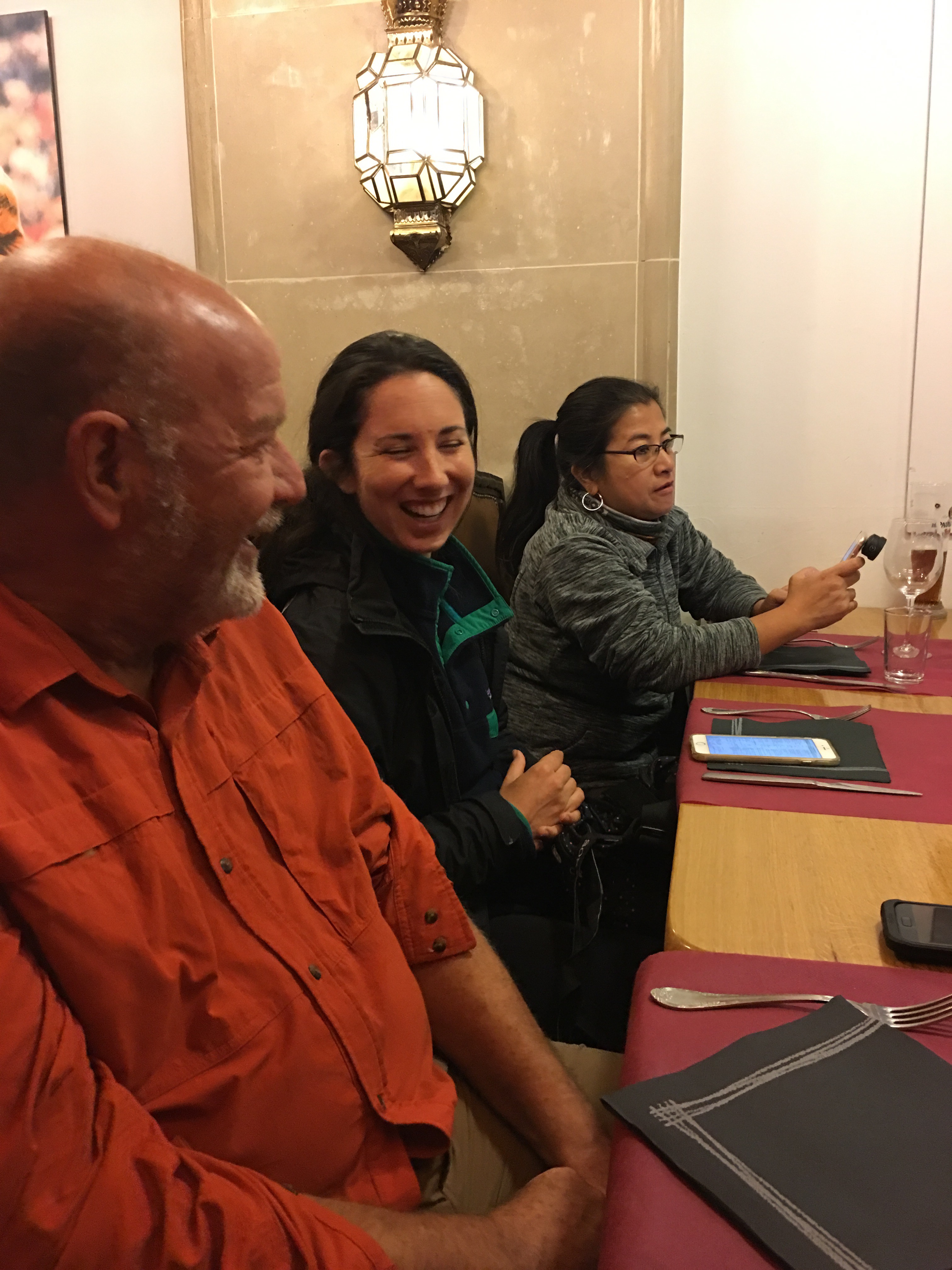
I made it 6 miles until I reached a small roadside cafe where, thank God,  Jessica and Anna were at a table sipping something. They took one look at me and knew all wasn’t well. I sat there thinking about the last 60 miles, 6 of which I just walked. Something deep down within me knew the party was over and time to call it quits, which I did. Anna graciously got me a cab and even paid for it. They both were sad for me but I knew that my health is more important than finishing and even receiving that certificate. It just wasn’t meant to be…God had other plans. 

The Camino teaches much, even…especially when things don’t work out the way planned or envisioned. The gentleman  who gave me my final stamp at the Pilgrim’s Office in Santiago saw clearly from my passport that I left the Camino after Sarria. He looked up at me with sad eyes knowing my disappointment but I quickly assured him I was just fine. He was the kindest man to me at a awkward moment. He reminded me that I should return and do the last 4 days and receive the Credential. He made out a special certificate indicating I walked from St. John pied de Porte, France to Sarria. How beautiful!!

I’ve spent the last the few days in Santiago, alone, enjoying the city and people watching with great coffee. Called the doctor and am on antibiotics for whatever it is I have. Things are fine. Looking forward to Chicago and being in familiar surroundings not living out of a backpack.  Everyone in the journey returned today, happy and relieved that they made it, and indeed they did. I’m proud of them and their spirit of commitment and perseverance. As I believe, the Camino doesn’t start until the moment you get off that plane and are home. 

The experience of the Camino must be let go of so that its Graces may begin to work. We grow as we let go and look back at the experiences that have changed our lives and allow Memory to move us forward. But WHAT we remember will determine HOW we move forward…or don’t move at all. I’m so grateful that these people let me in on their Camino, for our journeys intersected in joy and hope. 

I return with so many uncertainties and isn’t that the way of life? Everything about the future is uncertain. Where will God lead me, how will I know God’s Will, who are the people and friends walking the “way” with me, how will I deal with loneliness, illness, change and aging? Don’t these questions all sound so familiar? Life IS uncertain except for one thing: we have our faith which anchors us in hope and love. 

And it is Love which always has the last word. 

Peace. Fr. Frank 
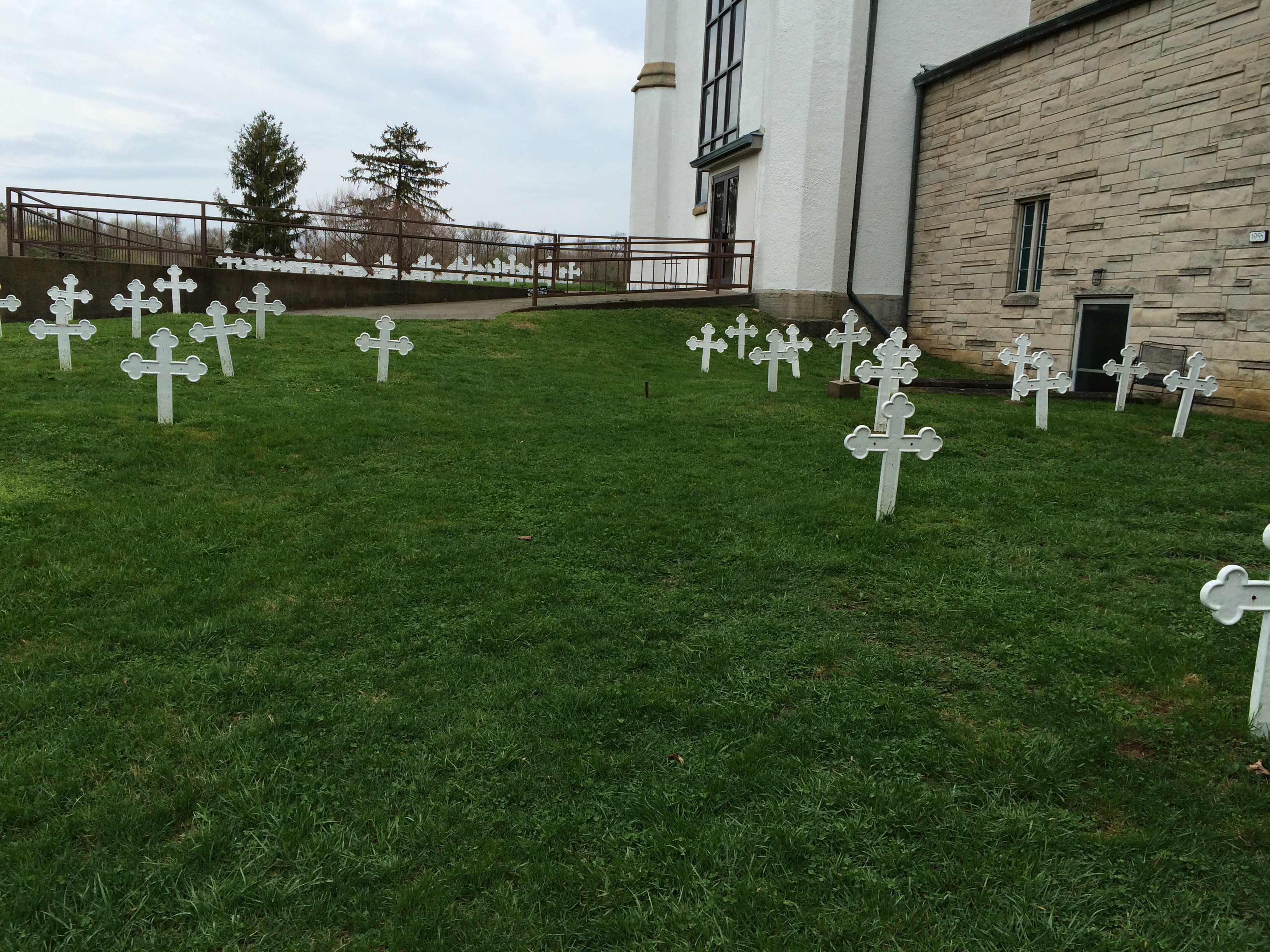
All Souls.  November 2, 2016

When you walk 6-7 hours each day, alone, the solitary journey elicits deeply rooted memories of people who have passed though the gateway of death. This  soulful walking connects one’s life to the earth, footstep by footstep, and this connection releases buried, mostly forgotten, memories. The problem with a religious pilgrimage is God has other unplanned plans in regards to these memories. One can’t be healed of the past if one is DISconnected with it. Pilgrimages mean Reconnecting…with God through remembering the people who have walked in and out of our lives, sometimes welcomed, sometimes surprised, sometimes very unwelcome. 

Walking hour after hour surfaces many wonderful memories causing a bittersweet joy, since you deeply miss the person remembered but know they are present with each step. You just KNOW it. However, difficult memories WILL surface that are quite painful when they become conscious…relived. The Camino is not for everyone, especially if you choose the route of repression. Bury the pains of the past…don’t face them, for often they’re just too painful. 

I encountered many pilgrims who were forced to face these unpleasant realities that lie deep in the lower regions of the subconscious. Some need serious help to the point of returning home. “Now is the time of salvation,” St. Paul teaches. When the rubber hits the road, or each walking foot connects with Mother Earth, the source of our bodies, this is our moment to TRUST God will carry us through these moments of trial. The basement of our subconscious needs to be cleaned out…aired out….the Light let in. Freedom.  Release. New memories. Healed memories. Maybe we are just not ready for the Camino right now. It takes Wisdom to admit this. 

The movie, “The Way,” with Martin sheen, which caused the Camino to explode in tourist popularity, is really about the healing of memories. The main character walks with his son’s cremains, spreading them at various places and shrines. His relationship with his son was strained and distant; his untimely death in the Pyrenees did not give this father the time to reconcile and offer forgiveness. But it wasn’t too late. Even after his son died so suddenly, the walk reconnected him with this distant son, forgiveness and healing occurred and a man is freed to walk a new Camino pushing in new directions. His son was alive…and well…

All Souls Day, a time to remember the people who helped to shape our identities and journeys. Some of these people may have inadvertently hurt us, or worse, advertently. Healing and forgiveness CAN happen.   NOW. Our faith teachers us that life continues when we breath our last, and those we deeply love and missed are safe and happy…waiting for us to join them. This never ending season of Advent compels us to wait with an openness to gratitude and forgiveness, given AND received. 

Peace. Fr. Frank

All Saints. November 1, 2016

The great teaching of Vatican II was that ALL are called to holiness, not just those who dedicated their life to service in the Church. We focused on the change of language, new liturgical ministries, study of Scripture, ecumenical outreach and a Church that must be engaged in the world,  instead of creating walls of suspicion… these are essential to the renewal of the church. But something is missing…the foundation of the reform and renewal. The teaching that all Catholics are called to a life of holiness, whatever state of life, is truly the radical teaching of the Council. 

I’m reminded of this epoch-changing teaching on this  feast of ALL Saints. The beatitudes, which frame the sanctuary of St. Teresa of Avila Church, are the foundation of gospel living and parish life. Every time we celebrate the Mass, those Beatitudes illuminate and inspire. The very Eucharist we celebrate week after week, nourishes us all to  live out these beatitudes, making our lives Holy and blessed. Every human being is called to be a “saint,” which means we are all ” saints in the making.” Every human being has the potential and the call to exude the holiness of a saint. 

There is nothing arrogant about wanting to be a saint, for becoming a saint means allowing humility and poverty of Spirit, the first of the Beatitudes, to transform how we live. Surrendering to a Spirit of poverty naturally leads us to be merciful, peaceful, compassionate, single hearted, righteous and self giving. I have met countless men and women whose lives beautifully reflect these gospel Beatitudes, people leading lives of holiness. Mothers and fathers giving their lives in sacrifice for their children; teachers who will do anything to reach their students, lawyers defending the rights of the poor, Doctors Without Borders, the unseen faces of the people who clean and work to make our lives easier, volunteers who get to know the people they serve, talking with them and eating with them, musicians, artists, architects…the list is truly endless. 

Countless  people have changed my life and my priesthood, inspiring me to live out my own calling in new and creative ways. The Saints were people of creativity, reflecting the image of God as Creator, Who wants us to share in the glory of transforming the world. Our God is the most humble reality the world will ever know, for our God wants US to shine and share in His beauty and goodness. A vital parish is a creative parish that seeks new ways of being church. The more creative we are, the more we are in tune with our God of three Persons in a community of love. Our parishes are to mirror this divine community, by living out the Beatitudes, accepting that God calls ALL of us to lives of holiness, by studying scripture and catechism, and praying every day, not just when convenient. We are called to take responsibility for the church and its growth, never leaving this to the priests and sisters and bishops and popes. Jesus called the apostles, and the bishops who succeed them, to a life of service, walking shoulder to shoulder with the People who are the church.  Those who lead have the responsibility to hand on the tradition in ways new and creative, but never wavering from the Truth. 

We are a Pilgrim Church on a journey to a point, a destination, which is the the fullness of the Kingdom. The Camino has a saying: the way IS the destination, meaning the endpoint isn’t the main point of the pilgrimage . There is a truth in this little phrase, but it can be very misleading for us who follow Christ. A destination does exist for us and this  Feast is a celebration of that is  destination. Perhaps the journey continues after we pass through the doors of death …who knows but God. But the journey in Paradise will not be fraught with dangers or getting lost or feeling left out. This heavenly journey will be creative ONLY in love and how it is expressed. 

Peace and Joy. Fr. Frank

The Power of the Rosary. October 28, 2016

Praying the rosary has been a powerful experience of prayer for me on this Camino. In the dark, cold morning as I hit the trail, I make the sign of the cross and start praying the rosary. The five joyful mysteries start my immersion in the life of Christ and the Virgin Mary. And the mysteries of JOY, LIGHT, SORROW and GLORY,  and all the Hail Mary’s,  create a beautiful blanket of prayer that surrounds me as I walk. So many of your names, families, petitions and hopes surface, giving color and texture to this  Spiritual blanket. 

I don’t use the rosary beads because both hands are grasping the hiking poles, without which I could not make this journey. And so, I just keep repeating the Hail Mary’s, creating  a mantra that slowly opens my heart to the mercy of Christ’s love for us. Learn the rosary as one way of praying amidst of many other forms and methods. What’s wonderful about the rosary is you don’t need a book, nor do you need any training or formation. You learn it by doing it. And their is NO correct way to pray the rosary, all you need is to memorize the Our Father and Hail Mary. If you can’t remember the mysteries, no problem…Mary doesn’t care, and most certainly, Christ doesn’t either. Just think of a moment in Christ’s life and pray over that event or “mystery.”  

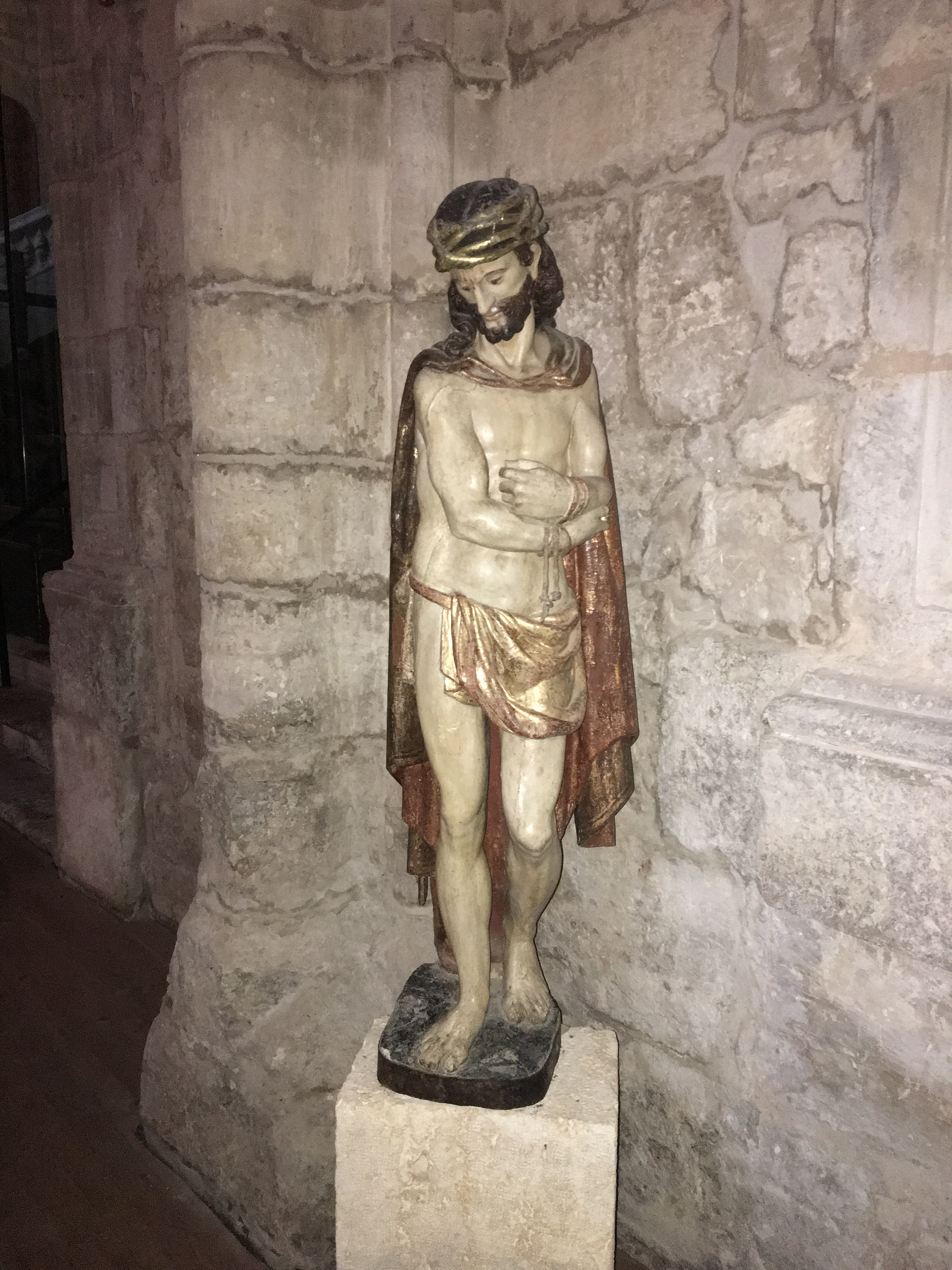
I have expanded the Sorrowful mysteries to include Jesus standing before Pílate; Jesus in front of the crowds as He hears the name “barrabas” being shouted; Jesus waiting alone in the “holding room” before he receives the cross. These have enriched my prayer of the rosary. Most often, I don’t think about any particular mystery, I simply keep repeating the words as a mantra that allows God to inspire me  in ways known only to God. 

Buen camino. Fr. Frank

Relentless Day on Camino. October 26, 2016

The weather today was spectacular, the scenery was beyond belief, but the physical hardship of  the walk was absolutely relentless. The road just kept going higher and higher and the rocks and bolders that made up most of the path made walking treacherous. This was a hard day for everyone on the  Camino…it never seemed to end. 

Within this journey I learned about the life journeys of several of my pilgrim walkers. Their pain and anxiety were much like the road, seemingly endless and tiresome, just like the physical terrain. How much this journey is a metaphor for life, symbolizing the often unchosen suffering that just appears in one’s life, like a large stretch of bolders on the Camino. You can’t avoid them, at least not for long. Losing a loved one, seeing a child face illness or addiction, ending a marriage, not finding the right person, losing a job or hating one’s current job…loneliness… these are the many realities that make the road rough and the journey tiresome. 

The Camino teaches to live in the present, accept the help that comes your way and it will, LET GO of plans that won’t work or relationships that don’t bring life, surrender to God and faith. These last two realities are rarely spoken about on this Camino, which is gradually being transformed into a walk with a purpose of finding one’s self. Religion, pilgrimage, Eucharist, Christ, community rooted in a common prayer…these are losing significance, which is ever so sad, in my opinion. When I asked about the religious value of the Camino during a conversation in the albergue,  a wonderful pilgrim from Spain said quite openly, that the Camino was no longer religious,  it was just “spiritual” for each individual pilgrim….or walker. I’m not even sure what being “spiritual” means, perhaps believing in some form of God or believing something on my own terms and with no defined teaching or doctrine. If it feels right to me and speaks a truth grounded in something outside of myself, I guess that is being “spiritual.” 

And so, the ancient pilgrimage to Santiago is being transformed from an infrastructure created by Catholicism to a modern infrastructure created by UNESCO. All religions welcomed or no religions, it just doesn’t matter, as long as one respects whatever anyone else believes or not believes. Religion and spirituality need to be personal and very private. The Camino is clearly reflecting this new, secular attitude. 

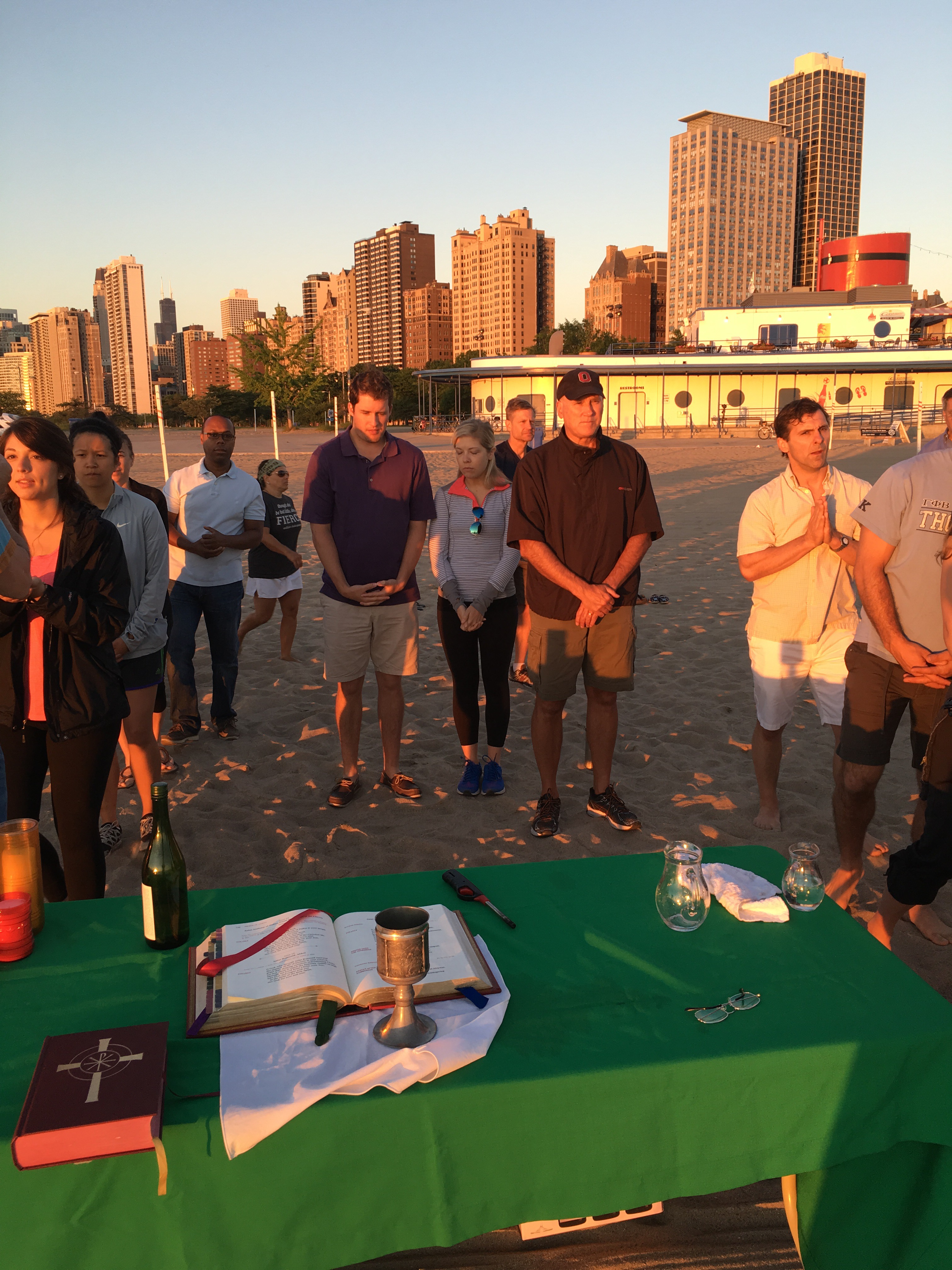
As I celebrated the Mass at the Cruz de Ferro, many people speaking Spanish clearly saw me celebrating a Mass but acted as if nothing special were going on. Their laughter and photo taking went on as I prayed the ancient prayer of the Eucharist with a wonderful fellow pilgrim. No big deal. After the Mass, I began talking and laughing with those around us, until a young woman approached and very politely asked us for silence as she was trying to pray. I was moved, and a bit embarrassed, by her sincere request. Four years ago when I prayed the Mass at this very spot, there was a certain solemnity in the atmosphere. Strangers paused and even prayed along, regardless of the language. 

As I continue, the Camino will always be, for me, a pilgrimage,  not primarily about meeting people and making friends, but about creating community with people of faith rooted in Christ, on a journey of faith. Of course, ALL are welcome, all or no religion, every race and culture and language can find expression on the Camino, for God loved  ALL. Of course. 

But I have a need to connect with people who share the same faith, the same basic understanding of church, the same ritual of worship and symbols that are revered and venerated by those who choose to commit to this community of the church. Most people don’t need or like or want any relationship with any organized religion. I do…which makes the journey, on and off the Camino, quite lonely. But Christ never promised it would be easy. And so I continue on the journey, facing rough  terrain and endless road blocks, with those who also choose to embrace a religious community rooted in thousands of years of history,  culture and faith openly expressed in ways respectful. The journey is important, but so is the destination: the beautiful cathedral, venerating the bones of St James with people who truly believe in the power of the Eucharist and the importance of Tradition. 

 Buen camino. Fr. Frank 

Brief Pauses. October 25, 2016

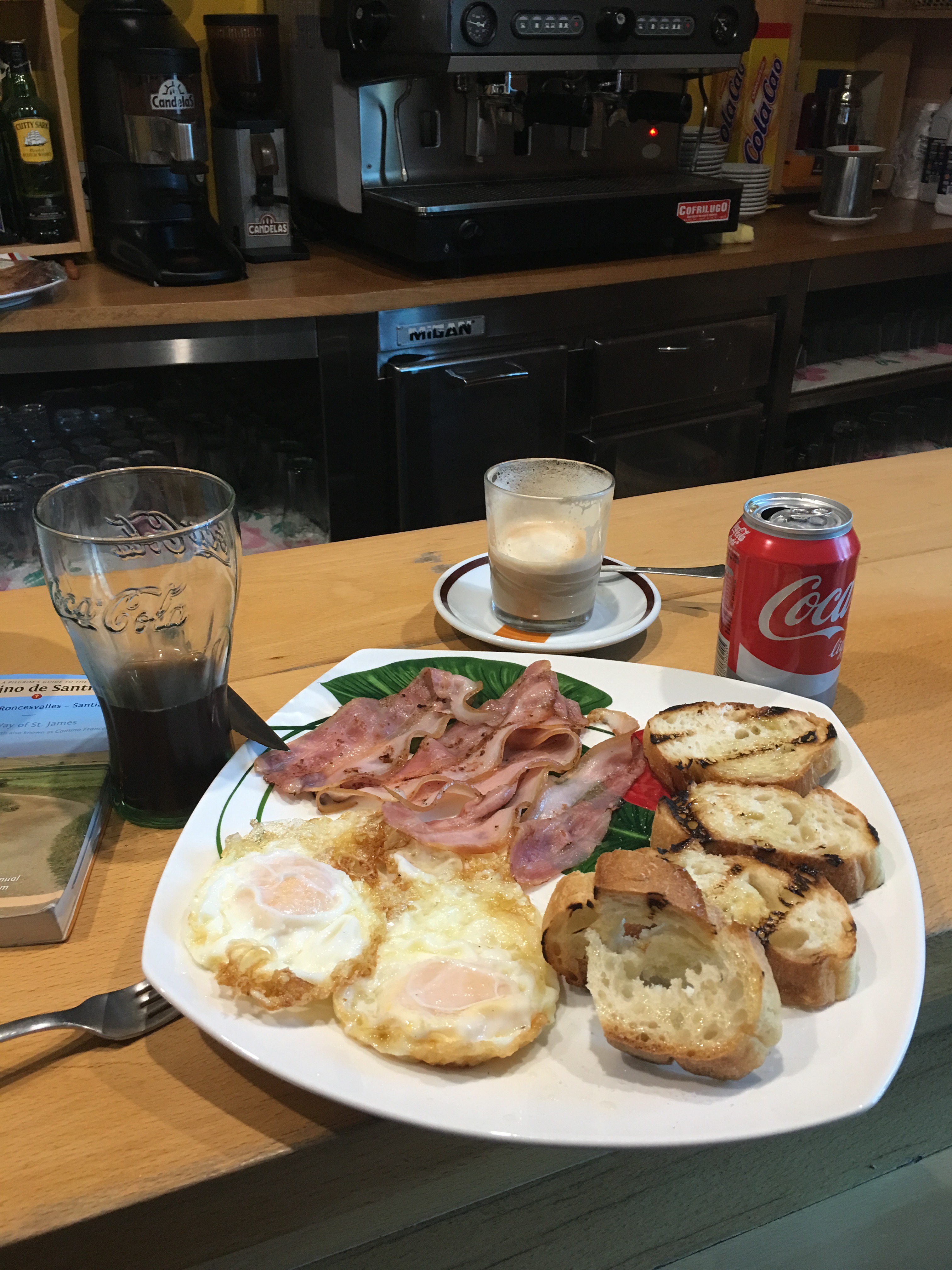
Walking such long distances as the Camino demands, it is essential to stop and pause to find inner strength through a café con leche, muy caliente, por favor! The pilgrim finds ability to pause through the many “bars”that appear just around the bend. One brief,  wonderful pause can completely change the mood of the long haul that can weary the soul and tire the body. A small,  not too obvious “bar,” the name given to these rest stops I call an OASIS, appear,  to put a smile on the pilgrim who exhales a sigh of relief. They rarely have a name, just, BAR. 

Jesus compares His Kingfom to a tiny mustard seed or a pinch of yeast. It’s the small things in life that truly matter. The Kingdom is like a small “bar” on the Camino that can strengthen and fortify thousands of pilgrims with a cafe con leche and a slice of tortilla. Without these rest stops, the pilgrim could never make it unless the backpack is filled with food and drink for the journey…weighing down the already too heavy pack. 

I little bit of yeast helps to create a large loaf; a tiny mustard become a huge bush or tree to give comfort to the birds and shade for the traveler. A little bar on the Camino helps to create a THRONG of humanity, give drink and food to whoever enters. These little establishments embrace any human soul,  being places of many cultures, languages and races. These little “bars” provide physical and human nourishment to bind together the pilgrims, transforming them into ONE family, if only for a brief moment in time. The Kingdom is built and strengthened by small, hidden  acts of kindness. Small pauses in small “bars” make all the difference in the world. 

Buen camino. Fr. Frank

Being Inclusive. October 24, 2016

Last night’s dinner was in a wonderful albergue in a tiny village near Astorga. It was a feast of the nations, of FOUR continents, people gathered around a simple, delicious feast. Everyone was included, and seemed to actually feel included, amidst multiple languages, accents, skin colors and ages. Including people and being “inclusive” is an attitude all seem to welcome and support. But how inclusive are we towards those with whom we disagree? How inclusive are we when it comes to those people who have different political leanings or who worship differently? How inclusive and welcoming  can our church be with those who disagree, but still remain true to her teachings?

Being inclusive doesn’t mean letting go of one’s values and core beliefs,  so as not to offend the other person. I think being inclusive means respecting  the person with whom we are at odds…listening to them and trying to find common ground. HOW we express our divergent views and opinions is key to being inclusive in a way that doesn’t compromise our values, nor demean the humanity of the other. 

The Pharisee in the parable of the two who went into the Temple to pray was clearly not being inclusive. Yes, he was righteous and observed the Law; he followed the traditions of his religion and he no doubt loved God. So far, so good. However, within that Temple, he SEPARATED himself from the tax collector,  also praying at the same time and in the same worship space. But their hearts were far apart…

The Pharisee couldn’t see himself as a part of sinful humanity because his spirit was inflated with pride and hypocrisy. He EXCLUDED the tax collector because he couldn’t embrace this “sinner’s” humanity. The Pharisee was actually denying his own humanity by failing to see himself as INCLUDED in the truth that we ALL are sinful and need healing. 

Two men went into the Temple to pray… only one left truly righteous and INCLUDED in the great sea of humanity. The Pharisee excluding himself from humanity, but he was nonetheless included in God’s love. Only God can be exclusively inclusive. 

Being Inclusive. October 24, 2016

Last night’s dinner was in a wonderful albergue in a tiny village near Astorga. It was a feast of the nations, of FOUR continents, people gathered around a simple, delicious feast. Everyone was included, and seemed to actually feel included, amidst multiple languages, accents, skin colors and ages. Including people and being “inclusive” is an attitude all seem to welcome and support. But how inclusive are we towards those with whom we disagree? How inclusive are we when it comes to those people who have different political leanings or who worship differently? How inclusive and welcoming  can our church be with those who disagree, but still remain true to her teachings?

Being inclusive doesn’t mean letting go of one’s values and core beliefs,  so as not to offend the other person. I think being inclusive means respecting  the person with whom we are at odds…listening to them and trying to find common ground. HOW we express our divergent views and opinions is key to being inclusive in a way that doesn’t compromise our values, nor demean the humanity of the other. 

The Pharisee in the parable of the two who went into the Temple to pray was clearly not being inclusive. Yes, he was righteous and observed the Law; he followed the traditions of his religion and he no doubt loved God. So far, so good. However, within that Temple, he SEPARATED himself from the tax collector,  also praying at the same time and in the same worship space. But their hearts were far apart…

The Pharisee couldn’t see himself as a part of sinful humanity because his spirit was inflated with pride and hypocrisy. He EXCLUDED the tax collector because he couldn’t embrace this “sinner’s” humanity. The Pharisee was actually denying his own humanity by failing to see himself as INCLUDED in the truth that we ALL are sinful and need healing. 

Two men went into the Temple to pray… only one left truly righteous and INCLUDED in the great sea of humanity. The Pharisee excluding himself from humanity, but he was nonetheless included in God’s love. Only God can be exclusively inclusive. 

Patience With the Fig Tree. October 22, 2016

One of the treats in walking through northern Spain is the ability to walk through vineyards, orchards of almond trees, the olive trees, and my favorite, the fig trees! I never knew fig trees grew along the Camino until one of the pilgrims pointed them out to me. But the figs weren’t ripe and these trees seemed to need water and care. 

Today’s gospel tells the parable of the fig tree in the orchard that had no fruit. The owner of the orchard wants to cut it down, but the gardener urges patience. Let the gardener have his way and try to bring life to the tree so that it CAN bear fruit. What a beautiful lesson for us all:

God has patience in our own lives, for oftentimes we are like that fig tree and bear little or no fruit. Why? Our own selfishness and indifference to the Life that IS within us…God, the beautiful Gardener tending the soil of our hearts. God is tilling away, trying to unearth the tangles of weeds and thorns we sow through our sins. God is patient with us; we need to be patient with ourselves. The first metaphor of God in scripture is GARDENER, and the brokenness of humanity begins in a garden. The image of the garden is vital in scripture: Eden in genesis and Gethsemene in the gospels. At the empty tomb, a “gardener ” is present…Jesus?? 

The Waters of the Spirit are waiting patiently for us to release them, settting them free…setting the waters  of the Spirit free to water seeds of kindness, mercy, peace, JOY, and yes, patience in the garden of our souls. Talk about baring good fruit!!! Could I go for a magnificent cucidati, the Italian cookie  filled with fresh, juicy figs!! Maybe  I’ll make them this Christmas with all those cannolis I never made! I need to start baring fruit!

Buen camino. Fr frank. 

Mother of Sorrows. October 21, 2016

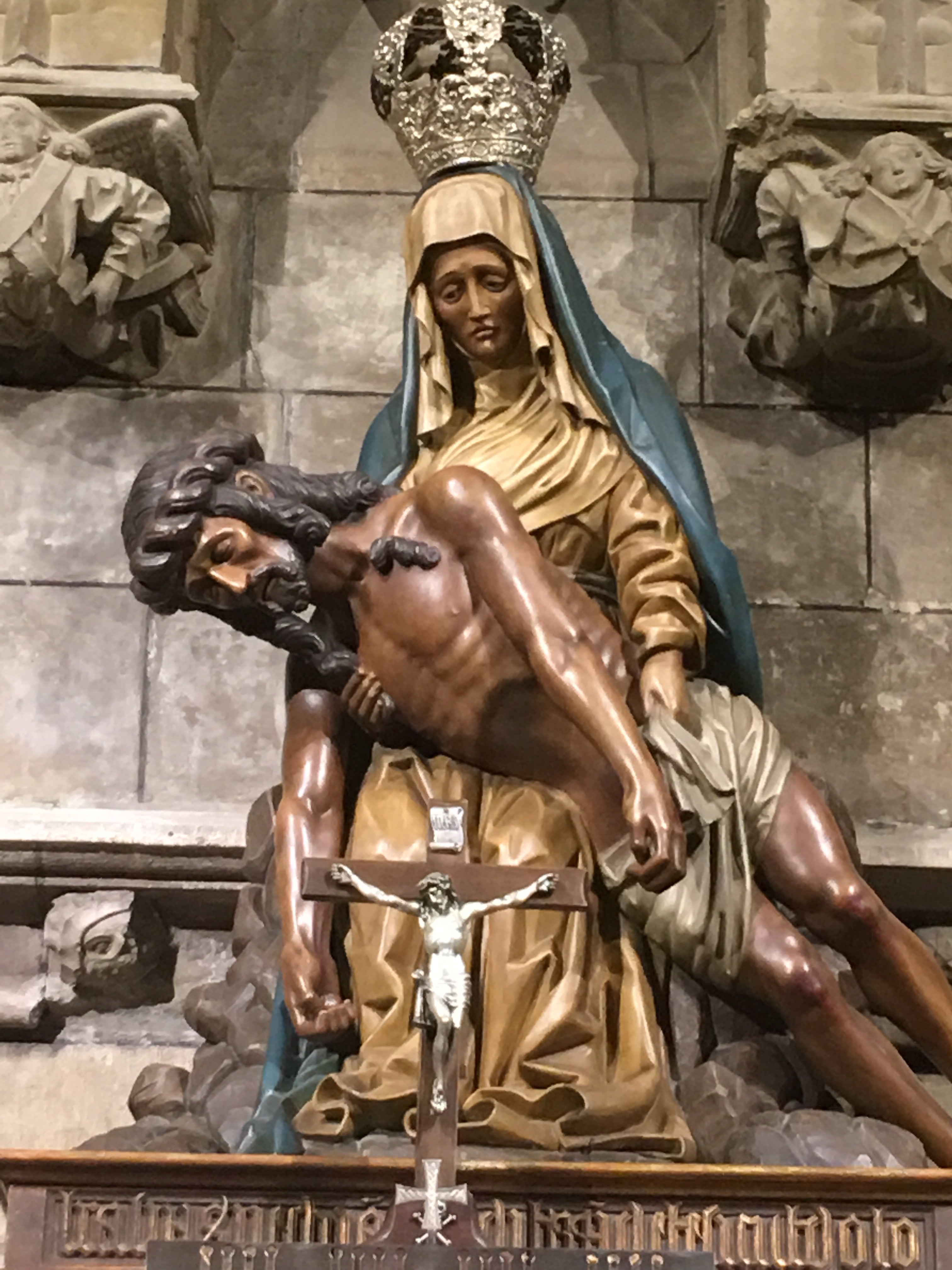
I’m sitting in a quiet chapel in the cathedral of Leon, praying before a powerful image of Mary, holding the dead body of her Son on her lap. Her anguish speaks of a mother remembering when she bounced her son Jesus on this same lap. How he laughed and giggled as only a child can. Her memory carried her to other moments etched in her subconscious, but now surfacing into new, resplendent life. 

Jesus, lost in the Temple as he dialogues with the Scribes; preaching in the synagogue, opening the Book of the prophet Isaiah reading words of fulfillment….how angry the people got; first signs of rejection piercing Mary’s heart, just as Simeon predicted; the miracles of healing; multiplication of loaves and fish; telling stories that further angered the leaders;  selling and sending disciples; healing  Mary Magdalene; opening his heart to outcasts and sinners and breakers of the Law; the rejection grew and grew, as did Mary’s anguish; the trial and shouts of Barabbas; the Cross on His shoulders…His body shattered; the Encounter on the Way to Calvary with one last kiss; nailed to the Cross naked, as He came into the world in the stable of Bethlehem; the Cry to the Father begging forgiveness,  ring thirsty, feeling abandoned, carrying for Mary, giving her as Mother to ALL: His last parting gift before surrendering His Spirit; and he breathed His last…

Mary held this tortured body, weeping as these released memories created a portrait of the Artist known as God. Mary did the hardest thing a mother can do: let go!! And she did, giving Him back to the Father Who would breath Spirit life into the God man Jesus vanquishing death and its finality. 

Love wins out…life wins out…for Him…for US…Buen Camino. Fr. Frank